What is Salt and Sodium?
Salt, or sodium chloride, is a compound made up of sodium and chloride ions: 40% sodium and 60% chloride. It's commonly used to flavor food and preserve it. While sodium is a necessary nutrient, mineral essential for various bodily functions, including regulating blood pressure and maintaining fluid balance. The human body requires a small amount of sodium to conduct nerve impulses, contract and relax muscles, and maintain the proper balance of water and minerals.
It is estimated that a person will need about 500mg of sodium intake daily for these vital functions. But too much sodium in the diet can lead to health risks: high blood pressure, heart disease, and stroke. American Heart Association recommends no more than 2,300mg, or one teaspoon, of salt per day, moving toward an ideal limit of 1,500mg per day for most adults.
Read Food Labels Carefully: Check Sodium Content and Choose Low-Sodium Options
Reading food labels and choosing low-sodium options is a crucial step in protecting your heart health. By following these simple tips, you can reduce your sodium intake and lower your risk of heart disease:
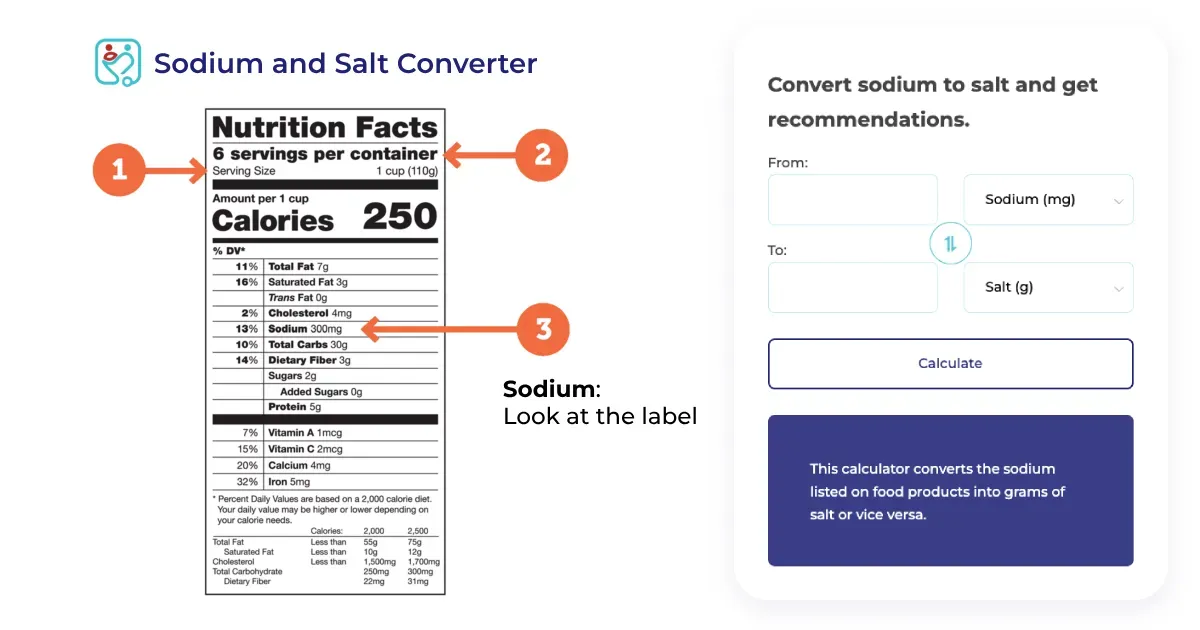
- Look for the sodium content: this is usually measured in milligrams (mg). Foods labeled "low-sodium" contain 140 mg or less of sodium per serving. "Reduced sodium" means the product has at least 25% less sodium than the regular version. "No salt added" indicates no salt was added during processing, but it may still contain sodium from other ingredients.
- Use herbs and spices instead of salt: try herbs like basil, oregano, and thyme, or spices like pepper, garlic, and ginger to add flavor to your food.
- Choose fresh foods: fresh fruits, vegetables, and lean proteins are naturally low in sodium.
- Limit processed foods: many processed foods like canned soups, frozen dinners, and snacks are high in sodium.
- Cook at home: this gives you control over the ingredients and allows you to reduce salt.
- Watch for hidden sources of sodium: some unexpected foods like bread and cereals can be high in sodium.
Reference: https://www.fda.gov/food/nutrition-education-resources-materials/sodium-your-diet